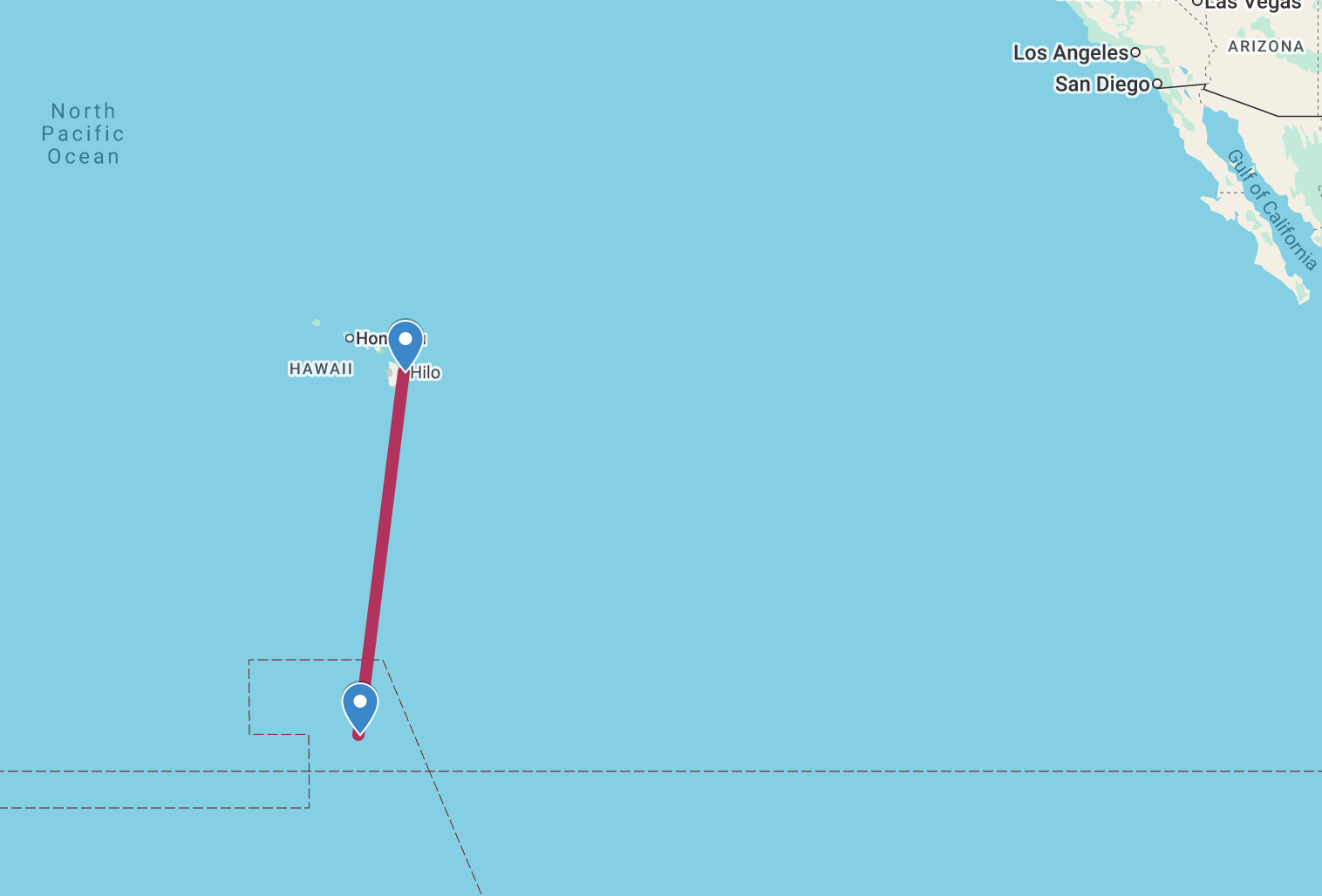
Leg 2: Maui to Kiritimati
Departure: Friday, June 19
Arrival: Saturday, July 4
15 days total expedition time (we cross the international date line)
Distance: ~1,350 nm
Cost: $7,150 per single berth
Fly into Maui (OGG) | Fly out of Kiritimati (CXI)
The Passage
Leg 2 carries us southwest from Maui on a classic ~1,350-mile tradewind passage to Kiritimati. Once cleared out of Hawaiʻi, we settle into the northeast trades, shaping a south–southwest course that balances speed, comfort, and long-range positioning while remaining north of the primary ITCZ band.
Expect steady 15–25 kt easterlies, long-period swell, warm air, and consistent downwind miles. We rotate full watch schedules, refine sail trim for extended runs under poled-out headsails or asymmetrics, and practice offshore systems management, chafe control, and heavy-weather decision-making.
While typically clear of the ITCZ, occasional isolated squalls provide valuable real-time training in radar use, reefing strategy, and squall management.
Tradewind rhythm sets in quickly: sunrise sail checks, fishing lines streaming, celestial navigation under expansive night skies, and the steady hum of self-steering carrying us across deep Pacific blue.
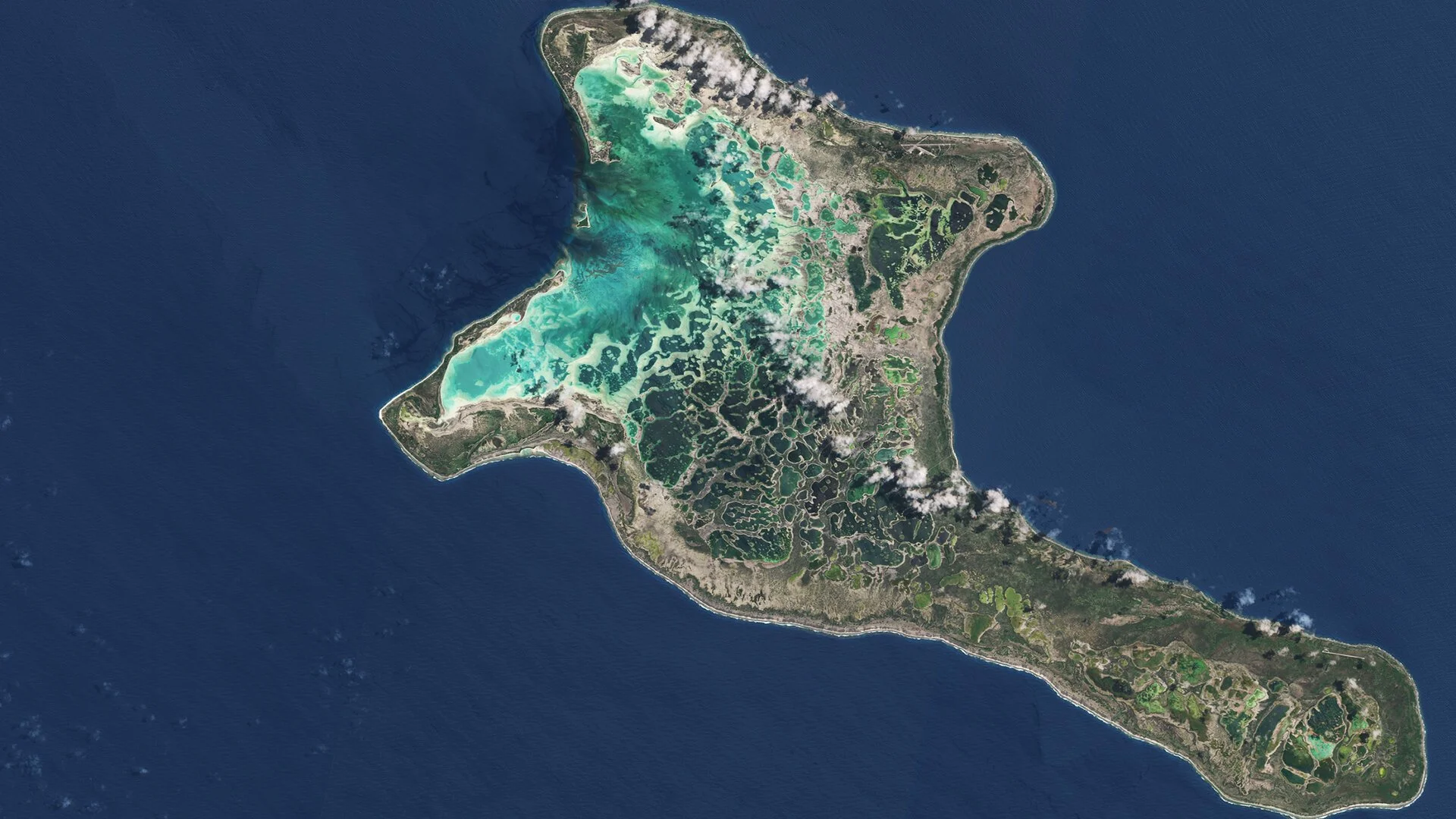
Landfall at Kiritimati is subtle and powerful — a low coral atoll rising slowly from the horizon, opening into one of the largest lagoon systems in the world.
Timing & Exploration
Passage time: ~8–11 days under sail, weather dependent
Total expedition duration: 16 days
The remaining days are intentional — providing routing flexibility and time to explore Kiritimati’s immense lagoon system after arrival. We slow the pace, rest after the crossing, and experience the scale and remoteness of the Line Islands before departure.
What to Expect
This is a hands-on expedition limited to six members with meaningful 1:1 instruction. You’ll rotate through navigation, weather, systems, cooking, and rigging roles while standing full watch rotations.
Instruction typically includes:
• Practical celestial navigation
• Trade-wind weather and ITCZ positioning
• Downwind and squall management tactics
• Power, water, and onboard systems management
• Full night-watch participation and routing decisions
Conditions & Highlights
Average run: ~140–180 nm/day
Conditions: Warm from day one with steady trades and predictable swell
Wildlife: Flying fish, tuna, mahi-mahi, dolphins, frigatebirds
Skies: Brilliant equatorial stars and Milky Way visibility